
Age Verification Required
This website contains products intended for adults 21 years of age or older. Please confirm your age to enter.
By entering, you confirm you are of legal vaping age in your jurisdiction. This product is not for sale to minors.
Sorry, you must be 21 years of age or older to access this website. Please come back when you are of legal age.
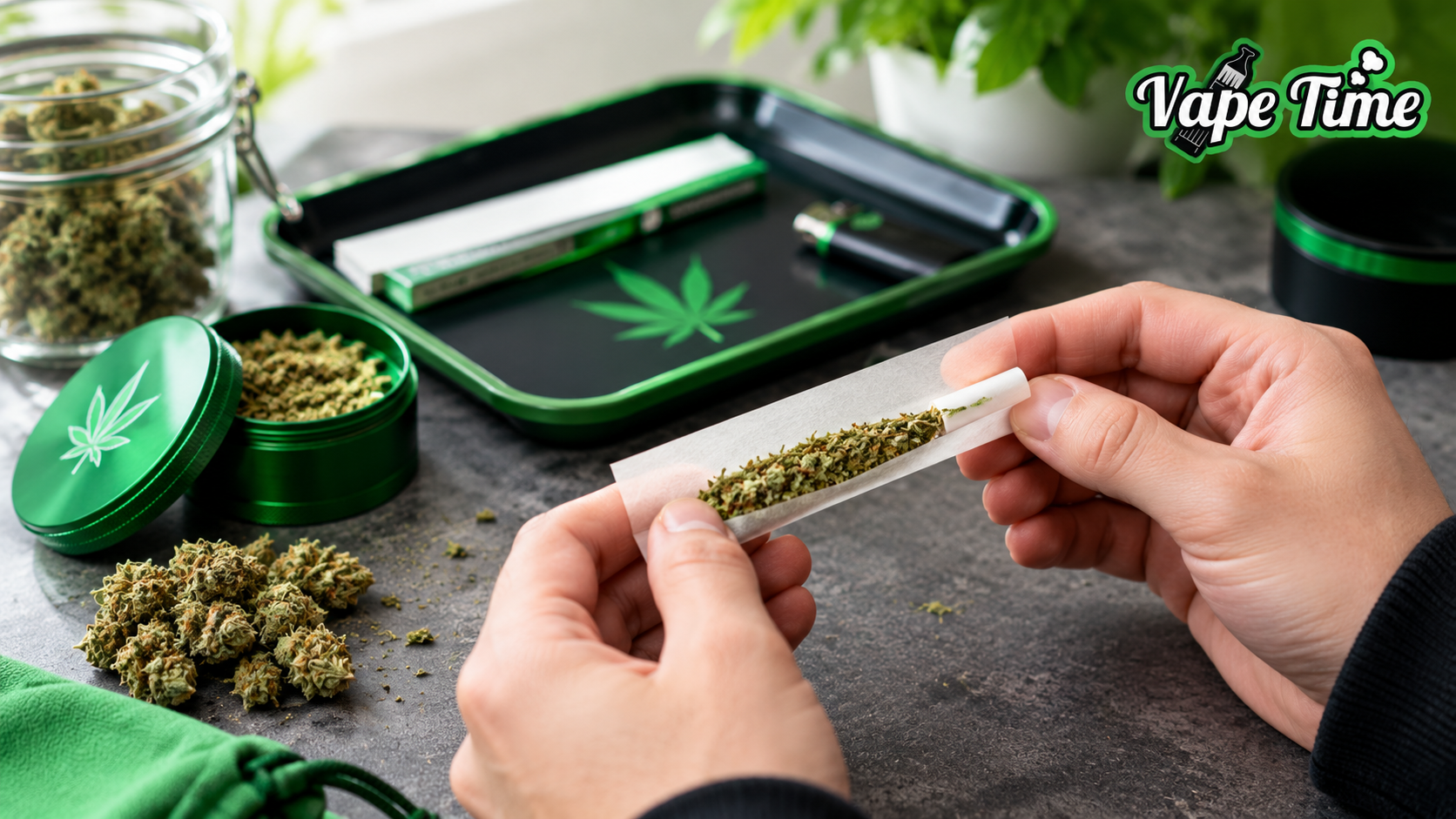
Rolling a joint comes down to five steps done in order: grind your material evenly, form a filter, fill the paper, roll and seal it, then pack and twist the end. Once you have done it a few times the whole process takes under two minutes.What You Will NeedYou need ground material, rolling papers, a filter tip (sometimes called a crutch), and something to pack the end with, like a pen or a rolling stick. A grinder makes an even, evenly burning joint far easier than breaking material up by hand, and it is worth the small upfront cost if you plan to roll regularly. Browse our full smoke shop near me houston selection to see everything available.Step by Step Rolling ProcessFirst, grind your material to a fine, even consistency, since large chunks burn unevenly and can cause the joint to go out. Second, fold a small strip of thin cardboard into a zigzag or a simple roll to form your filter tip, and place it at one end of the paper. Third, spread the ground material evenly along the paper next to the filter, leaving a bit of empty paper at the far end to seal. Fourth, tuck the edge of the paper closest to you around the filter and roll it forward between your fingers to shape it, then lick the exposed gummed edge and seal it closed. Fifth, pack down any loose material from the open end using your packing tool, then twist that end shut. For more on types of smoking pipes, see our guide, Types of Smoking Pipes Explained: Which One Is Right for You.Each of these steps benefits from a light touch rather than force. Pressing too hard while shaping the roll can tear the paper, while a gentle, even motion keeps the shape consistent and makes sealing much easier. Common Beginner MistakesThe most common issue is grinding unevenly, which causes some parts of the joint to burn faster than others. Overpacking is another frequent mistake, since a joint packed too tightly restricts airflow and makes it hard to draw. Rolling too loosely causes the opposite problem, where the joint burns too fast and can canoe, burning unevenly down one side. Take your time on the first few and it gets easier quickly, and most people find their third or fourth attempt looks noticeably better than their first. For more on what is a dab rig, see our guide, What Is a Dab Rig? A Beginner’s Guide to Dabbing.Choosing the Right Rolling PapersPaper choice affects both the rolling experience and the finished burn. Rice papers are thin and burn slowly, which makes them a popular choice for a cleaner taste, though their thinness can make them slightly trickier to handle for a first timer. Hemp papers are thicker and more forgiving to roll with, at the cost of a slightly faster burn. Paper size matters too, since a single wide paper is easier to manage for a first attempt than a king size paper, which holds more material but takes more practice to roll evenly.Tips for a Smoother, Slower BurnA consistent, moderate grind burns more evenly than material that is too fine or too chunky. Rolling with even pressure rather than squeezing hard in one spot keeps the shape consistent from end to end. Letting the glued seam dry for a moment before lighting also helps it hold together and burn cleanly. Lighting evenly around the tip rather than just on one side also helps prevent the canoeing effect that ruins an otherwise well rolled joint.Practicing the Roll Before It CountsA useful trick for genuine beginners is practicing the roll motion with an empty paper or even a strip of regular paper before using actual material. This lets you get a feel for how much pressure to apply and how the paper behaves as it wraps around the filter, without wasting material on a roll that falls apart halfway through. Most people notice a real improvement between their very first attempt and their third or fourth, simply from getting comfortable with the motion.Storing Rolled Joints ProperlyIf you roll more than one at a time, storing them in an airtight container away from heat and direct light helps keep them fresh and prevents the paper from drying out and becoming brittle. A joint left loose in a pocket or bag is far more likely to get crushed or unravel than one kept in a proper case, so a simple storage container is a worthwhile small investment for anyone who rolls regularly.Common Rolling Mistakes to AvoidA joint that burns unevenly, known as canoeing, is usually caused by uneven packing rather than bad paper. Packing one side more densely than the other creates a lopsided burn, so distributing material evenly along the length of the paper before rolling helps prevent it. A joint that is rolled too loosely will burn too fast and harsh, while one packed too tightly will not draw properly, so aiming for a firm but not compressed roll gives the most consistent result.Practicing the TechniqueLike any hands on skill, rolling gets easier with repetition rather than by reading about it once. Using a cheaper paper for practice rolls before moving to a preferred brand takes the pressure off getting it perfect the first time, and most people notice a real improvement after their first handful of attempts. |