
Age Verification Required
This website contains products intended for adults 21 years of age or older. Please confirm your age to enter.
By entering, you confirm you are of legal vaping age in your jurisdiction. This product is not for sale to minors.
Sorry, you must be 21 years of age or older to access this website. Please come back when you are of legal age.
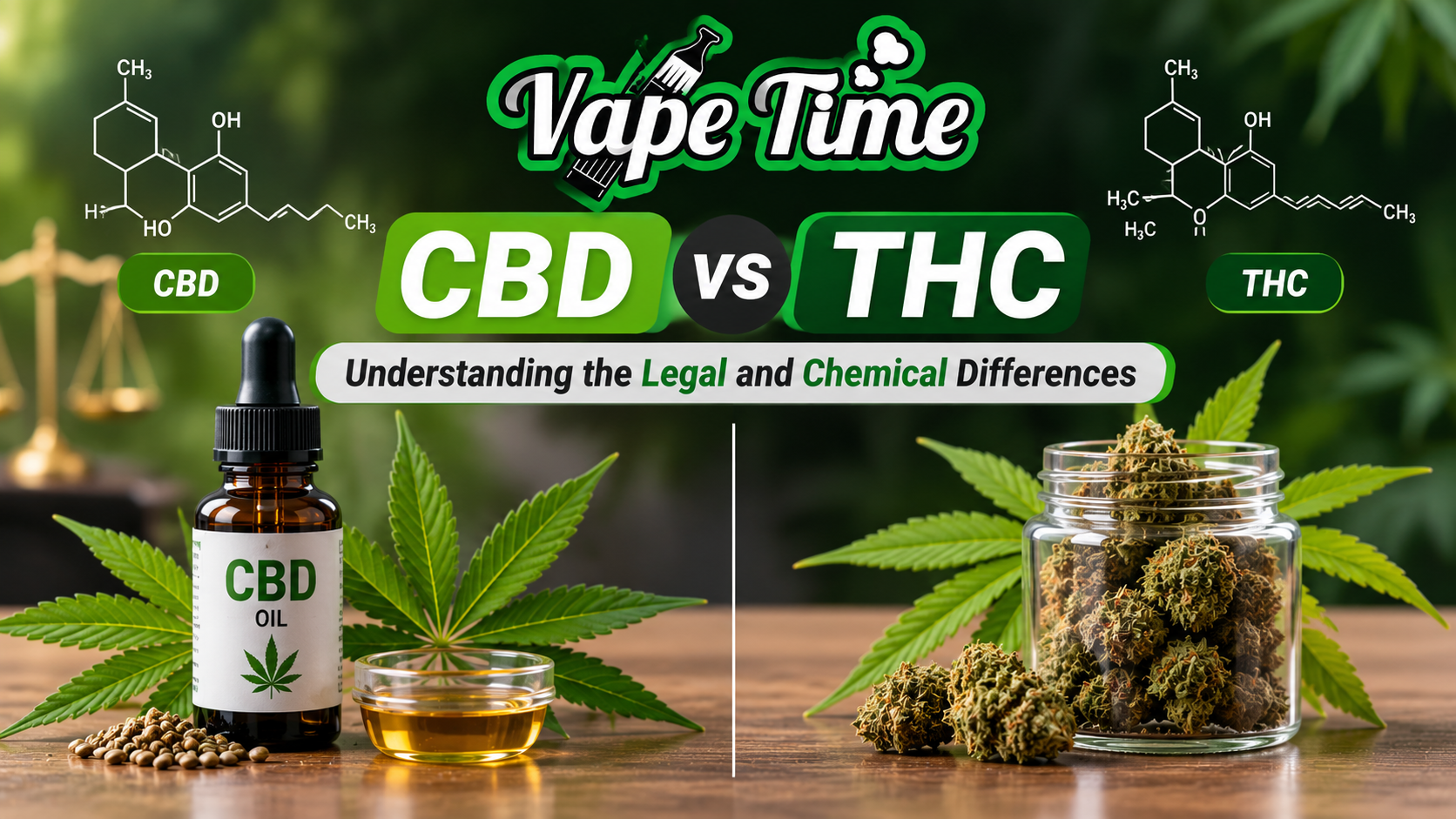
CBD and THC both come from the cannabis plant, but CBD does not produce a high while THC does, and that single difference drives nearly every legal and practical distinction between them.
CBD, short for cannabidiol, and THC, short for tetrahydrocannabinol, share the same basic molecular formula but differ in how their atoms are arranged. That structural difference changes how each compound interacts with receptors in the body, which is why they produce such different effects despite coming from the same plant family and even being present together in the same plant in varying ratios. Browse our full cbd shop houston selection to see everything available.
THC binds strongly to receptors in the brain associated with the feeling of being high, producing the intoxicating effect most people associate with marijuana. CBD interacts with the body differently and does not produce that same high, which is why it is marketed for relaxation and wellness rather than intoxication. Many CBD users specifically choose it because they want potential wellness benefits without any of the cognitive or perceptual changes associated with THC. For more on is cbd legal in texas, see our guide, Is CBD Legal in Texas? What You Need to Know in 2026.
Hemp derived CBD, containing no more than 0.3 percent THC, is legal under both federal and Texas state law. THC above that threshold falls under separate, more restrictive marijuana laws that vary significantly by state. This threshold, not the plant species, is what legally separates a hemp product from a marijuana product, which is a distinction that trips up a lot of people who assume the two are simply different names for the same thing. For more on delta 8 texas, see our guide, Delta 8 in Texas: Laws, Legality, and What to Know.
CBD is commonly sold as oils, gummies, capsules and topical products, often marketed for relaxation, sleep or general wellness. THC products, where legal, include flower, edibles, vape cartridges and concentrates, generally sold through separately licensed and regulated channels distinct from hemp CBD retail. The retail channels themselves are often a useful signal, since a hemp CBD shop and a licensed marijuana dispensary operate under entirely different regulatory frameworks even in states where both exist.
CBD does not produce a high, while THC does. CBD is legal in Texas if hemp derived and under 0.3 percent THC, while THC above that threshold falls under a separate, more restrictive regulatory framework. Common uses for CBD include relaxation and wellness, while THC is used recreationally and, in some places, medically where legal.
Understanding this difference matters practically, not just legally. A shopper looking for a product without intoxicating effects should specifically look for CBD products with clearly labeled low THC content, while someone interested in THC effects needs to understand that those products are regulated separately and are not interchangeable with what is sold as hemp derived CBD.
Both CBD and THC are extracted from cannabis plants using broadly similar extraction technology, but the starting plant material and the intended final THC level differ sharply between hemp focused CBD production and marijuana cultivation. Hemp used for CBD is specifically bred and grown to keep THC levels low from the start, rather than relying purely on downstream processing to hit the legal threshold, which is part of why reputable hemp CBD products can consistently stay compliant.
A lot of the public confusion between CBD and THC traces back to both compounds coming from the same plant family and sharing a similar sounding name structure, combined with inconsistent labeling from lower quality brands in the past. Buying from a retailer that provides clear lab documentation, as discussed for CBD gummies and other CBD products, is the most reliable way to avoid this confusion as a shopper.
The practical difference between a legal hemp derived product and a restricted one usually comes down to a lab reported THC percentage on the packaging, not how the product looks or is described by a seller. Vape Time only stocks products that meet Texas hemp thresholds, and shoppers who want extra confidence can ask to see a certificate of analysis for a specific product before buying.
CBD and THC serve different purposes for different people, and a Vape Time team member can help match a product to a specific goal, whether that is a legal hemp derived option for everyday use or simply understanding why a particular product is or is not available in Texas. Asking questions before buying is a better approach than guessing based on packaging alone.
A common misconception is that any product labeled hemp derived is automatically legal everywhere, when in fact the actual THC content, not the labeling alone, determines legality under Texas law. Another misconception is that CBD and THC always come from different plants, when both are compounds found in the same cannabis plant, just present in different ratios depending on the strain and how the product is processed.
When in doubt about a specific product, ask a Vape Time team member to confirm whether it falls under the CBD or THC category before you buy, since the two are regulated differently under Texas law and the answer affects what you can legally purchase in store.
Q: Does CBD get you high like THC?
A: No. CBD does not produce the intoxicating high associated with THC. It interacts with the body differently and is generally used for relaxation rather than intoxication.
Q: Is CBD legal everywhere THC is not?
A: Generally yes for hemp derived CBD under 0.3 percent THC, since it is treated as legal hemp under federal and Texas law, while THC above that threshold falls under separate and more restrictive rules.
Q: Can a product contain both CBD and THC?
A: Yes, some products are formulated with both, but if the combined THC content exceeds 0.3 percent, the product falls outside the legal hemp threshold regardless of the CBD content.